
"The tree that caused tears of joy in some it is only a green thing in the way for others. But in the eyes of the man of imagination, nature is imagination itself. As a man, well see. As the eye is formed, such are his powers. " William Blake in a letter to Dr. Trussler.
The invention of the receptacles
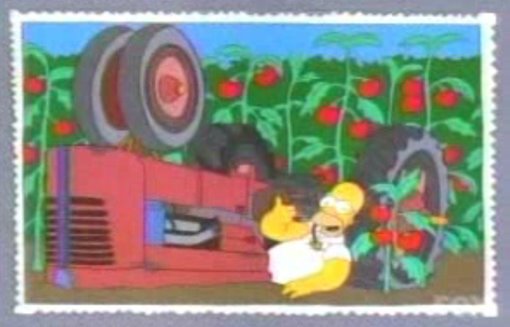
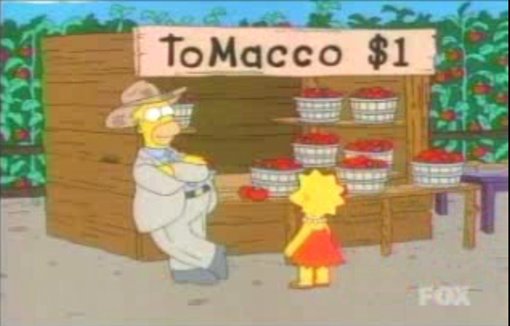
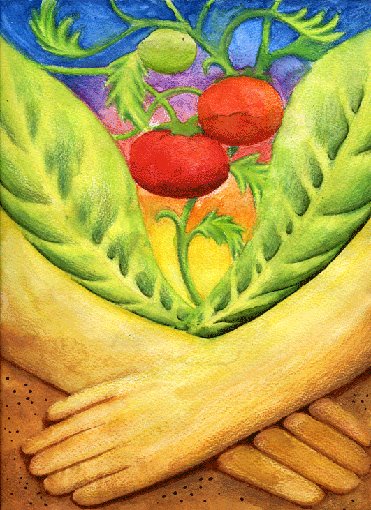
The receptacles, the union of tomato and snuff, is a plant that grew out of some drawings. In a memorable episode of the TV series The Simpsons in 1999, its protagonist Homer Simpson becomes a farmer and accidentally discovers the "receptacles," a mutant hybrid of tomato and snuff. Although its red fruits have softened ocher interior, all that proves is immediately hooked because of its high nicotine content. The receptacles is a powerful drug. Within days, Homer gets rich selling receptacles.

 Recently, Rob Baur, a fan of The Simpsons in Oregon, decided to bring to life your favorite episode of the TV series by grafting a tomato seedling roots of snuff. Despite their differences, Lycopersicum esculentum and Nicotiana tabacum belong to the same botanical family, the Solanaceae, and that is why we can prosper together in the proverbial receptacles.
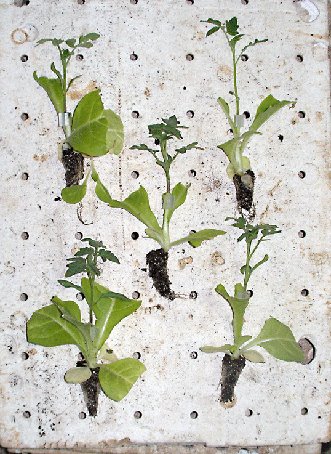
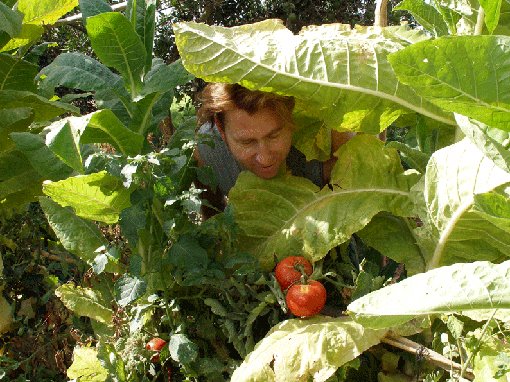
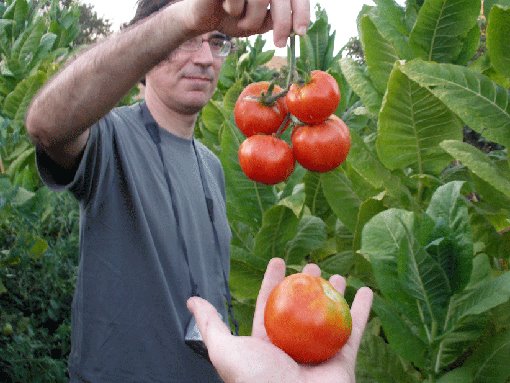
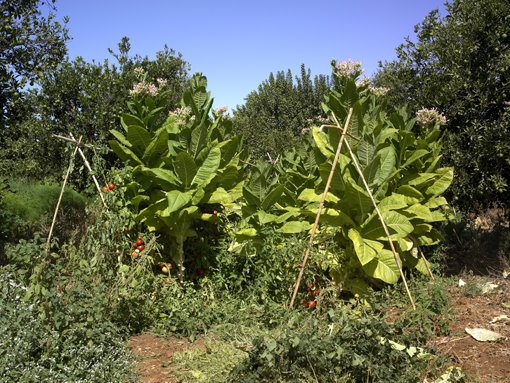
 Fascinated by the discovery of the receptacles on the Internet, I decided to copy the idea to make it an art project trying to graft receptacles in my house. After several failed attempts, grabbed some samples and they even bear fruit. These are images of the grafts.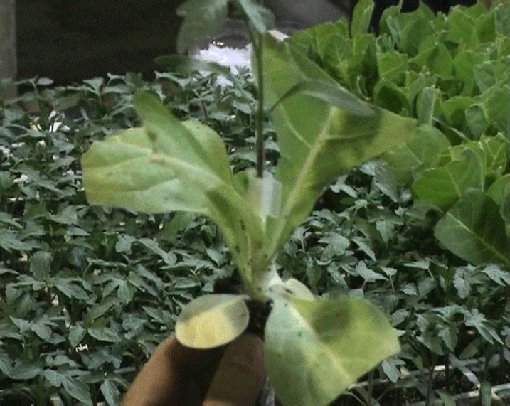
 Encouraged by the results, I decided to immerse myself in the project from power. For me, the marriage of tomatoes and snuff is a celebration of racial mixing and the New World from which both plants. The tomato, juicy food, represents the body and snuff, sacred plant and represents the spirit powerful drug. The snuff causes cancer, while the lycopene in tomatoes prevents it. The union of two worlds in the electrical means to transcend the distinction of food and drugs, disease and remedy, and body and soul.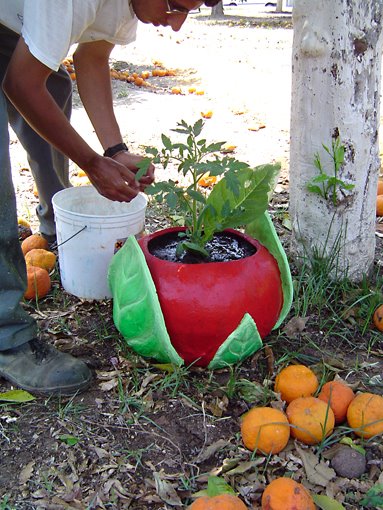
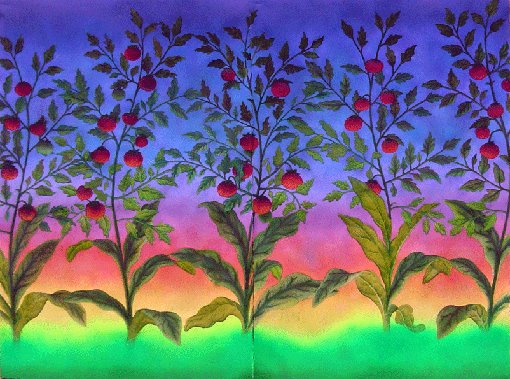
In the following months I painted and sketched while sharing ideas with my friends, artists, gardeners, anthropologists and shamans. In the spring of 2005 and at the invitation of Carlos Angulo got the opportunity to expand bio-art research with the proposal of a crop on his farm Tomac, the New Florida in Dos Hermanas, an olive farm near Seville .

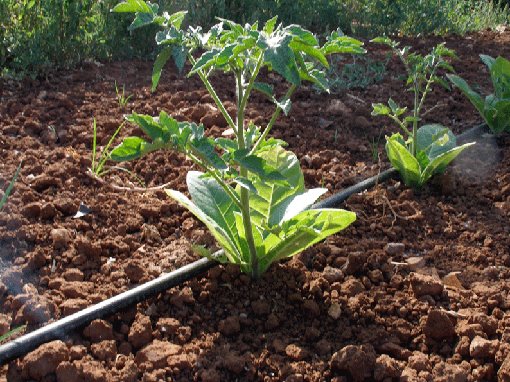
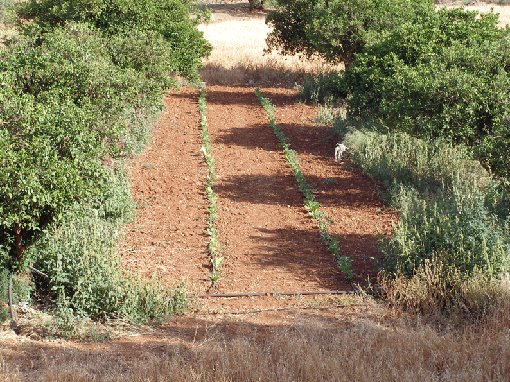
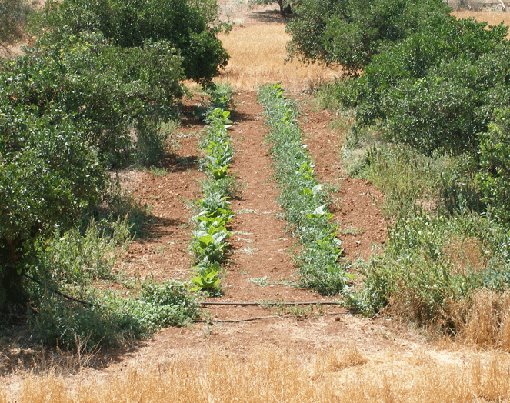
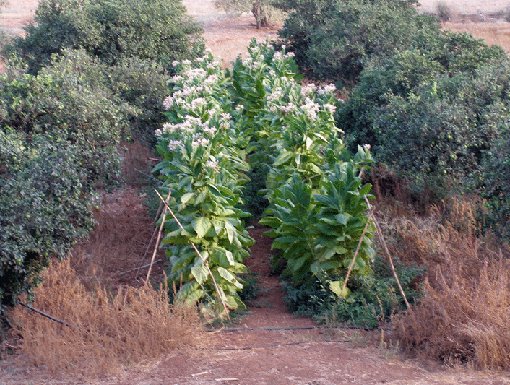
With the invaluable help of Jose Gonzalez, a veteran field man, prepare and fertilize the ground, and laid two lines of a hundred feet of drip irrigation to receive a hundred grafts in the red earth receptacles Nazarene. Over the months spring and summer and take care of our plants grow, watching them grow with joy. The format of the receptacles became my place of work outdoors, traveling with delight as she imagined a garden of sculptures living in the midst of nature.

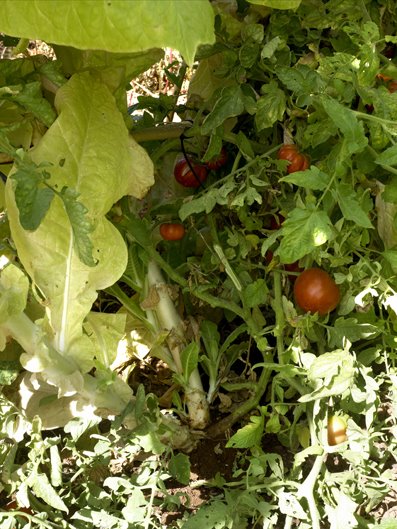

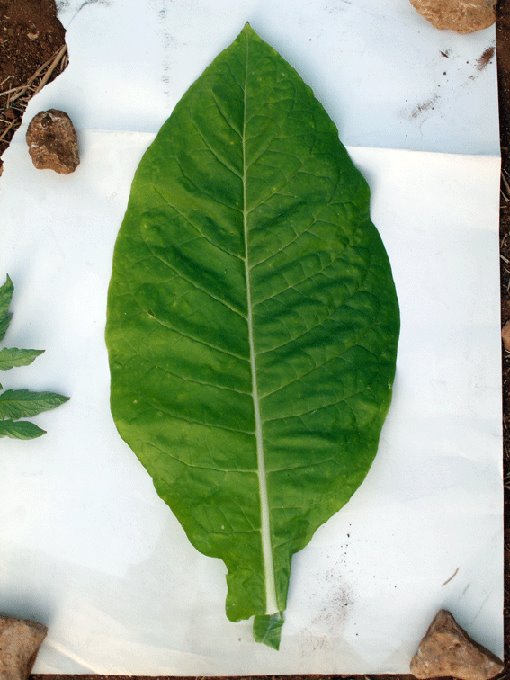


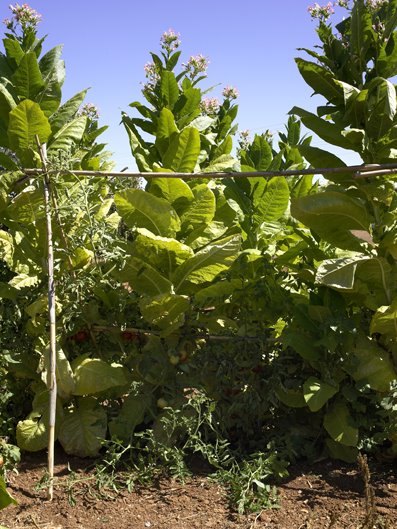
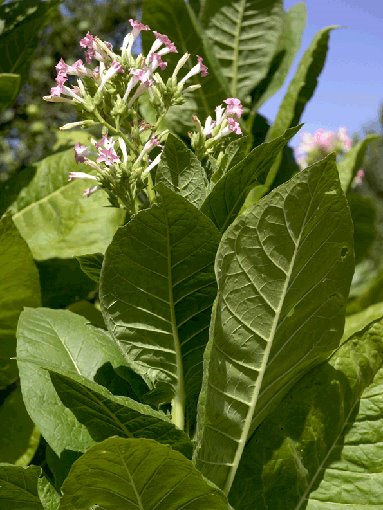
Trip to Mexico in February 2006 I had the pleasure to meet Maria Concepcion Perez de Celis and Helena Hernández, curator and director respectively of the Art Museum of Tlaxcala in Mexico. They proposed me to work on a project for the museum and when I speak of my experiments with the receptacles were infected with enthusiasm for the idea. Shortly after the first time I traveled to Mexico in search of the origins of the two sacred plants.
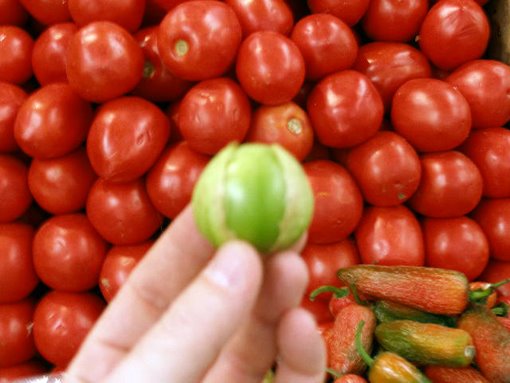
Actually, the project naturally falls from power in the Mexican context. Tomato and snuff, plants from this part of the world have an ancient tradition of food use and shamanism. What Europeans know as "tomato" Lycopersicon esculentum the is known in Mexico by the Indian name "tomato." For Mexicans, the tomato is the small green tomato, bitter taste and an epidermis as seen in the photo.
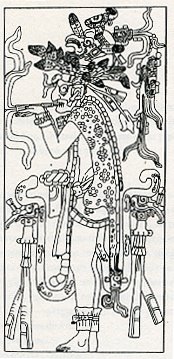
The snuff occupied a place of honor in the Mayan culture, and many objects bear witness to the official use and recreation that was given to this plant. Played a key role in the Mayan rituals, as the smoke was the means by which the sacrifices offered to the gods, which were an essential part of that civilization, could reach the sky.
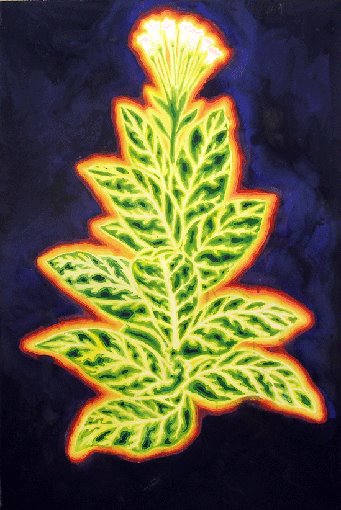
conversation with anthropologists met the snuff wild Nicotiana rustica, a variety that differs from the common snuff is much stronger. It is this variety that was used, and still used in shamanic use as snuff to power. "

 Ideology
 exposure from power Chronicle much about the history of the tomato plants and snuff and our landscape and historical narratives as they are inscribed in the landscape or place for people who live or lived here. The intersections of nature, culture, history and ideology form the substrate on which we grow, our land, our city, our place.
These narratives appear in the changing meaning of nature through history and the different values \u200b\u200bassociated with or attached to it, to the extent that they point to different social and political objectives to which the concept has been submitted. Nature has always been both a source and a projection of our imagination. In the Middle Ages, symbolized religion in the Renaissance, Baroque science and politics. In modern times, nature has been designated as the place for discussion of different groups, often with conflicting political interests. Andrew Ross has pointed out in The Chicago gangster theory of life that "... the ideas from the authority of nature nearly always have their origin in ideas about society." Just as mankind does not exist outside of nature, can not assert that our conception of nature exists outside of culture or society.
Yet culture can only be defined as to what is . Represents the irreducible nature of desire. Green is the shadow that has escaped the "haunting look museum of mediation" and "has not entered into representation" (Hakim Bey). Nature as "difference, imminent and immediate, not only in the forest but also in the garden or the city as a crystallization of desire spontaneous organic life itself."
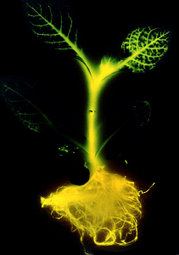
As stated Vandana Shiva, now, genetic engineering and new monopolies in the field of agriculture and medicine are robbing the Third World communities creativity, innovation and empowerment in agriculture. Rather than farmers themselves decide what is planted in the fields and what is served in the kitchen, agriculture based on globalization, genetic engineering and corporate monopoly of seed will create a food system and worldview in which corporations global control what is planted in our fields and what we eat. The corporate executives who invest capital in theft and biopiracy will present themselves as creators and owners of life.
society do not want a situation of violent usurpation of the creativity of citizens of third world by global corporations in biotechnology, who call themselves the "Industry Life Sciences", even though lead to the extinction of millions of species and millions of small farmers.
Federico Sevilla Guzmán
June 2006
June 2006

This work is licensed under a Creative Commons .
0 comments:
Post a Comment